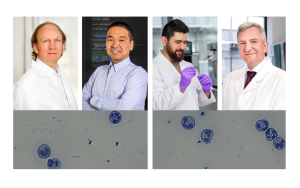
Dortmund, 25th November 2025
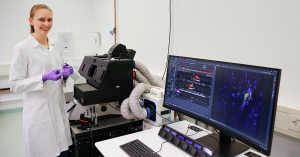
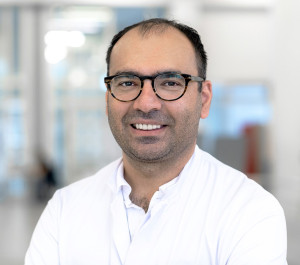
Nora Pauly is a doctoral candidate in the ISAS Bioimaging group. She is conducting research on the consequences of heart attacks.
Nora Pauly (27) is working alongside 32 other doctoral candidates to investigate the potential long-term consequences of heart attacks. The immunologist is pursuing her doctorate in the Research Training Group »RTG 2989 Targeting Cellular Interfaces in Reperfused Acute Myocardial Infarction (TCI repAMI) « (see info box). To learn more about her work in the Bioimaging research group at ISAS, the editorial team asked her to complete the following sentences.
-
I am doing my PhD at ISAS on…
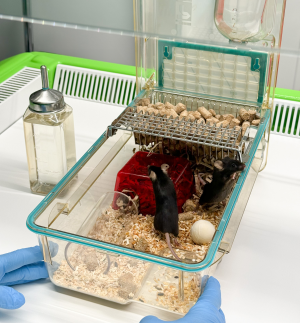
a specific type of immune cell: macrophages. I am particularly interested in the differences between various subtypes of macrophages before and after a heart attack. We suspect that these subtypes perform different functions during a heart attack and are influenced by a specific cytokine, the macrophage migration inhibitory factor (MIF). I intend to investigate this process in more detail by "switching off" this factor and examining its impact on the various macrophage subtypes in the hearts of mice after a heart attack, using a confocal microscope, for example.
-
This is important for research on heart attacks because…
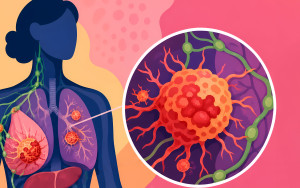
MIF could be a potential therapeutic target for reducing consequential damage. Previous research has revealed how reperfusion injury – the damage that occurs after blood supply is restored to a previously occluded vessel – develops. However, it remains unclear how this damage can be reduced.
-
In the laboratory, I work with…
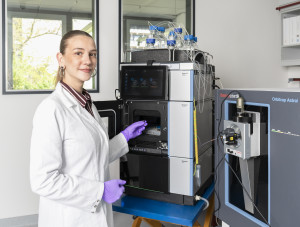
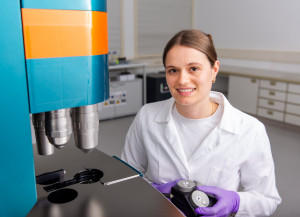
three different devices. Using a confocal microscope, I can examine the spatial distribution of macrophage subtypes in detail. For example, I can see whether they are in the atrium, ventricle or apex of the heart. After a heart attack, the microscope allows me to clearly see where the dead heart muscle cells are and where the vessel has been constricted. I can identify individual subtypes using a flow cytometer. Although I cannot distinguish areas of the heart as clearly with the flow cytometer as with the confocal microscope, the analysis is more sensitive and provides information about the number of subtypes present. In addition, I will soon be working with a light-sheet fluorescence microscope. This will enable me to examine the entire heart of a mouse at once and view the macrophage populations in three dimensions.
-
Through the Research Training Group of the German Research Foundation (Deutsche Forschungsgemeinschaft, DFG), I gain…
very detailed insight and a wealth of background knowledge on heart attack research. This is thanks to numerous lectures designed to bring doctoral students from ISAS and the clinic up to the same level of knowledge. Clinic visits, which take place twice a year, also provide an opportunity to learn first-hand about the processes involved in patient care. Feedback at seminars, where we present the status of our research, and at various meetings with professors helps me stay on track scientifically and get the most out of my dissertation project.
About the DFG Research Training Group »TCI repAMI«
The Research Training Group »RTG 2989 Targeting Cellular Interfaces in Reperfused Acute Myocardial Infarction (TCI repAMI) « is funded by the German Research Foundation (Deutsche Forschungsgemeinschaft, DFG) and focuses on the consequential damages of heart attacks. Emergency reperfusion – the rapid reopening of a coronary artery – can lead to inflammatory processes. These processes are based on an interaction between specific immune, vascular, and heart muscle cells. TCI repAMI aims to analyse this interaction to identify new treatment options for heart attack patients.
Following the bed-to-bench-to-bed principle, the researchers first identify a clinical problem, before creating an experimental design in the laboratory. After analysing and evaluating the research data, the findings are taken back to the clinic for contextualisation at the patient's bedside.
Interdisciplinary training is one of the programme's key components. Tandem teams, consisting of two experts from clinical practice and fundamental research, supervise a total of 33 doctoral students.
TCI repAMI is funded by the DFG under project number 449437943.
(Protokoll: Anna Becker)