Dortmund, 28th January 2026
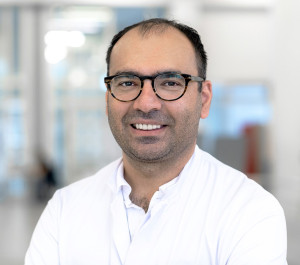
Prof. Dr Tanja Rudolph is a senior physician at the Herz- und Diabeteszentrum NRW (HDZ) and contributes her many years of experience in cardiology to the project ‘HI-FIVE – GRK5 inhibitors for the treatment of various heart failure entities’ (‘HI-FIVE – GRK5-Inhibitoren zur Therapie verschiedener Herzinsuffizienz-Entitäten’). Together with ISAS, the Lead Discovery Center and her colleagues at HDZ, she is working to develop a new therapeutic approach for heart failure.

Prof. Dr Tanja Rudolph is a cardiologist at the Herz- und Diabeteszentrum NRW (HDZ) and clinical director of the HI-FIVE research project.
© HDZ NRW
Prof. Dr Tanja Rudolph's day at the clinic is tightly scheduled. At 7:45 a.m., the morning meeting begins at the (Clinic for General and Interventional Cardiology / Angiology). It is followed by procedures in the hybrid operating theatre, treatments in the cardiac catheterisation laboratory, and rounds and consultations with patients and their families. Rudolph devotes about 80 to 85 percent of her working time to these and other clinical activities. Albeit her busy time sat the clinic, she usually takes a few hours of her remaining time on certain days to work on research projects such as HI-FIVE.
Rudolph discovered her enthusiasm for cardiology early on in her studies. ‘The heart fascinated me from the very beginning,’ she recalls. During a nursing internship, she witnessed a patient who had suffered a severe heart attack being discharged from hospital just a few days later. This experience reinforced her desire to work in cardiology.
Heart failure: a multifaceted disease
Heart failure is a central theme in the work of the cardiologist and the HI-FIVE project. ‘Not all heart failures are the same. That's why it's crucial to understand the disease better than we have so far.’ Rudolph emphasises that different causes can lead to different symptoms, making treatment complex. To provide the best possible care for patients, it is therefore crucial to consider individual factors and work together on an interdisciplinary basis.
Bridge between research and clinical practice
From Rudolph's perspective, HI-FIVE stands out because it considers both systolic and diastolic heart failure: ‘The mechanism of action of GRK5 inhibitors is very innovative. If all goes well, they will also be highly effective, so that they’ll close a gap in drug treatment. Our project could save many lives.' HI-FIVE is a highly translational collaborative project, designed to bring research and clinical practice together closely. For Rudolph, the technical expertise of the partners is crucial, as is the quality of the collaboration.
In the HI-FIVE project, she is responsible for the medical management of the clinical part. Alongside PD Dr Anna Klinke, Head of the Agnes Wittenborg Institut für translationale Herz-Kreislaufforschung (Agnes Wittenborg Institute for Translational Cardiovascular Research) at HDZ, she defines the project's clinical parameters and develops its study design.
HI-FIVE
As part of the HI-FIVE research project, scientists from ISAS, Lead Discovery Center GmbH and Herz- und Diabeteszentrum NRW (HDZ) are developing a new therapeutic approach to heart failure. The focus is on GRK5 inhibitors, which inhibit a key enzyme that is overactivated in heart failure. The aim is to treat different forms of heart failure in a more targeted manner, especially in patients for whom existing drugs are ineffective or insufficient. The joint project started in 2025, will run for three years and is funded by the EU and the state of North Rhine-Westphalia.
Her tasks include selecting suitable patients for the study and examining them. Extensive basic clinical data is collected from all participants, including information on current medication, blood markers and detailed echocardiograms (ECG) to analyse systolic and diastolic heart function. Long-term ECG are used for further analysis of heart function. All patients are observed over a period of one year to record the further course of the disease.
The aim is to evaluate laboratory results in patients and thus bridge the gap between experimental research and clinical application. The first patient was enrolled in the study in December 2025, and a total of around 500 patients are expected to participate.
Personalised therapy for heart failure
When it comes to the future of heart failure therapy, Rudolph sees great potential in precision medicine. She believes that a better understanding of the individual causes of disease is crucial to select targeted therapies and personalise treatment. She also places great importance on early detection, given that many patients remain unaware of their condition for a long time. “Structured early detection programmes, such as those established for many types of cancer, could be an important step in preventing cardiovascular diseases.” She has the opinion that new technologies, such as AI-based evaluations of ECGs or data from wearables, could be helpful in the future, too.
‘My wish for cardiology is that we can detect diseases earlier and thus prevent suffering,’ says Rudolph. Through projects such as HI-FIVE, she is helping to make this vision a reality today, to the benefit of patients.
(Eske Haverkamp)
»HI-FIVE – GRK5-Inhibitoren zur Therapie verschiedener Herzinsuffizienz-Entitäten« was launched in July 2025. The state government of North Rhine-Westphalia and the European Union are funding the project with approximately 2.1 million euros over the next three years.