Dortmund, 19th December 2025
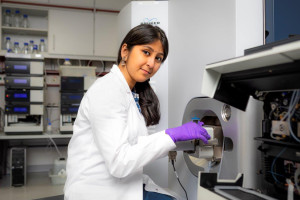
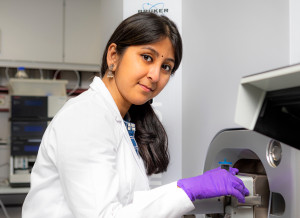
As little as possible – that is the goal of Susmita Ghosh, a doctoral student in the Biofluorescence research group. The biologist explains why she strives for less rather than more in the laboratory when it comes to her research on neutrophil granulocytes. These immune cells play a role in defending against infections, as well as in tumours, strokes and heart attacks. While neutrophils mainly aid healing, they can also worsen the course of the disease after a certain point. Therefore, Neutrophils are essential for immune defence, but they can also damage the body's own tissue during inflammatory processes. This dual role is precisely what Ghosh's research focuses on.
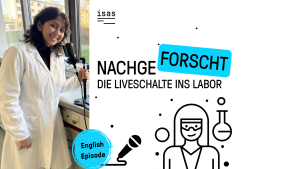
Susmita Ghosh is a biologist and doctoral candidate researching the role of neutrophil granulocytes in fighting infection.
In order to determine the different functions of the immune cells, Ghosh and other researchers are investigating the proteome (the totality of all proteins) in neutrophils. One challenge in mass spectrometry analysis is the low cell count of infiltrated neutrophils in samples, such as the tissue of patients after a stroke or with a tumour. This is why the 29-year-old has optimised a method that delivers very meaningful results despite a low number of neutrophils. Instead of millions of cells, 1,000 are now sufficient – and in the future, just a handful or even single cells should be enough. This means that samples no longer need to be pooled, i.e., mixed together. Why working with small cell numbers is crucial and what Tabasco sauce has to do with neutrophils, Ghosh explains in the English episode of »NACHGEFORSCHT – DIE LIVESCHALTE INS LABOR« with host Cheyenne Peters.
(Elai Arts)