Dortmund, 12th February 2026
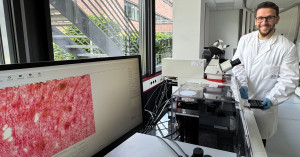
Kevin Hau is conducting research at ISAS on the long-term consequences of heart attacks.
Kevin Hau (28) works in the Proteomics research group at ISAS. After completing both his bachelor's and master’s theses, he is now pursuing a doctorate at ISAS. As a PhD student, he conducts research within the Research Training Group ‘GRK 2989 Targeting Cellular Interfaces in Reperfused Acute Myocardial Infarction (TCI repAMI)’ (see info box) focussing on damage caused by myocardial infarction. To learn more about his research, the editorial team asked him to complete the following sentences.
-
For my doctoral thesis at ISAS, I am investigating…
the changes in heart muscle cells before and after relief with a left ventricular assist device (LVAD). Clinicians use these cardiac support systems when advanced heart failure occurs following a myocardial infarction. I am particularly interested in how using an LVAD affects the cellular mechanisms that enable the heart to recover after a heart attack.
-
In the laboratory, I work with...
various omics analyses for three different classes of molecules: lipids (fats), metabolites, and proteins. For my analyses, I use technologies such as mass spectrometry-based imaging, matrix-assisted laser desorption/ionisation (MALDI), and liquid chromatography-tandem mass spectrometry. One of the challenges, in addition to applying the methods themselves, is integrating the data. For example, I need to combine MALDI images of metabolites with quantitative protein data. My aim is to gain comprehensive insight into the metabolic processes of heart muscle cells by combining different analytical methods.
-
Through the DFG Research Training Group, I have already been able to…
gain in-depth insight into everyday clinical practice through our collaboration with University Hospital Essen. For instance, I was able to observe the implantation of an LVAD and the transplantation of a fully artificial heart. This gave me a different perspective on the samples that I would later work with in the laboratory, as I could see where they came from.
-
I have been at ISAS since writing my bachelor's thesis because...
the team spirit in our research group is excellent and I really enjoy the atmosphere at ISAS. It is also special to work with state-of-the-art technology in well-equipped laboratories. And finally, I enjoy the professional and personal networking opportunities at ISAS – I have made many friends here over the past years.
GRK 2989: Targeting Cellular Interfaces in Reperfused Acute Myocardial Infarction (TCI repAMI)
The Research Training Group TCI repAMI focuses on consequential injury following a heart attack. While the rapid reopening of a blocked coronary artery is lifesaving, it can also trigger inflammatory processes. These reactions are caused by an interaction between specific immune, vascular, and heart muscle cells. The research training group aims to improve the understanding of these processes and to identify new therapeutic approaches for patients. TCI repAMI operates according to the bed-to-bench-to-bed principle, moving from clinical questions to laboratory-based research and back to the patient's bedside.
TCI repAMI is a collaboration between the University of Duisburg-Essen, including University Hospital Essen, and ISAS. Tandem teams each consisting of two experts from clinical practice and basic research supervise a total of 33 doctoral candidates.
The German Research Foundation (Deutsche Forschungsgemeinschaft, DFG) is funding this Research Training Group under project number 449437943.
(Protocol: Anna Becker)