Skip to content

NACHGEFORSCHT-Podcast Episode 3: Studying as a Working-Class Child

Dortmund, 19th July 2022

Dr Alexander Knodel completed his doctorate in Physics in only two and a half years. According to the federal record on young scientists (Bundesbericht Wissenschaftlicher Nachwuchs) 2021, he was not only about two years faster than the average PhD student in the natural sciences, but at the age of 27, Knodel was exceptionally young.

At first, however, Knodel did not know whether a degree and later doctorate were the right career path. In the new podcast episode (available only in German), the son of a non-academic family opens up about what ultimately helped him make a choice for his studies and during his time as a PhD student at ISAS. Knodel also talks about his passion for his field of studies and explains, what it has in common with an efficient oven for cancer research.
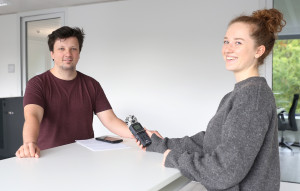
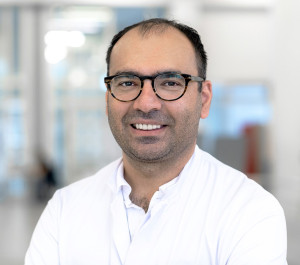
Für unseren Podcast sprach Dr. Alexander Knodel mit Cheyenne Peters aus dem Team Kommunikation über seinen rasanten Karriereweg.

Dr Alexander Knodel talks to Cheyenne Peters from the Communications team about his fast career path.

© ISAS
Folge 3: Studieren als Arbeiterkind – von Zweifeln zur Blitzpromotion

Share

Further articles

PODCAST »NACHGEFORSCHT – DIE LIVESCHALTE INS LABOR« Episode 12: Less Is More, at Least When It Comes to the Number of Cells

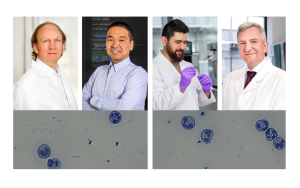
PhD student Susmita Ghosh talks about her research on neutrophil granulocytes – tiny immune cells that play a role in both defending the body against infections and inflammatory processes. Instead of working with countless cells, the biologist optimises analytical methods to enable meaningful proteome analyses with an extremely small number of cells. Ghosh explains why ‘less is more’ and what this has to do with modern mass spectrometry in episode 12 of the podcast.

What are you doing at ISAS, Nora?

Nora Pauly is writing her doctoral thesis on the consequences of heart attacks at the joint graduate college of Essen University Hospital and ISAS. With the bed-to-bench-to-bed principle, her work in basic research is closely linked to the everyday clinical practice of caring for heart attack patients.

New Framework for Efficient Image Data Analysis in Biomedicine

How can AI be used optimally in bioimaging research? A team of international researchers and scientists led by Dr Jianxu Chen from ISAS has developed a framework designed to make it easier for biomedical scientists to work with data-centric AI. Using the example of vascular segmentation, the authors of the publication in the journal npj imaging now demonstrate the advantages of the new framework.

3 Questions for Susmita Ghosh

How does gut microbiota affect the immune system? Susmita Ghosh conducts research on proteins and immune cells at ISAS. In this interview, the biologist talks about her work and explains how gut flora and the immune system could affect the outcomes of a stroke.

Susmita Ghosh sitzt am ultrasensitiven Massenspektrometer und stellt eine Proben ein.

Gut Flora & Stroke: How Microorganisms Influence Our Immune System

Which factors can activate immune cells after a stroke? This question was investigated by researchers at University Hospital Essen and ISAS. Their work focused on the gut microbiota.

3 Questions for Dr Ali Ata Tuz

In his doctorate, Dr Ali Ata Tuz researched the causes of immunodeficiency after strokes and was already working closely with ISAS at the time. Following this, he subsequently devoted himself to the behaviour of immune cells in the bioimaging research group at ISAS. In this interview, the physician talks about his path from the clinic to application-oriented basic research.

Dr. Ali Ata Tuz sitzt am Konfokalmikroskop und schaut frontal in die Kamera.. Auf dem Bildschirm nebem dem Mirkoskop sind in grün und violett Mikroskopaufnahmen von einer Probe im Mikroskop zu sehen.

Heart Failure Rarely Occurs on Its Own: ISAS Researchers Develop New Treatment Pillars

The symptoms, subsequent problems and therapeutic challenges of patients with heart failure are increasingly challenging for general practitioners and cardiologists. Doctors are limited in their choice of treatment options, especially for patients with additional diseases. At ISAS, researchers are therefore focussing on broadening the therapeutic spectrum.

Prof. Dr. Kristina Lorenz.

New Ionisation Method: From Open Questions to Closed Plasma

Mass spectrometry only works with electrically charged, i.e. ionised, particles. Researchers often use plasma for this purpose. In a series of publications, scientists from the Miniaturisation Research Group have shed new light on this ionisation method and presented a completely new type of plasma. This does not require a continuous gas flow and is therefore particularly resource-efficient.

Cayian Tian adjusts the gas supply to the plasma.

“We essentially ask ourselves the same questions”

In the ISAS cooperation project “The Secret World of the Immune System”, ISAS researchers and artists from the storyLab kiU at Dortmund University of Applied Sciences and Arts brought microscope data to life in an immersive space. Lennart Oberscheidt, research associate and visual effects (VFX) supervisor at storyLab kiU, talks about the special features of the project and the similarities between art and research in an interview.