Dortmund, 25th March 2026
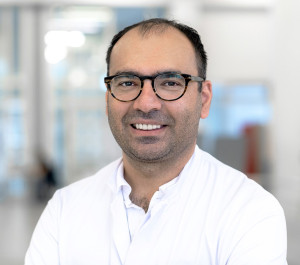
Anna Ruzhyna is a Clinical Research Associate working on the HI FIVE project (see info box). She works at the Herz- und Diabeteszenrum NRW (HDZ NRW). Her daily routine consists of taking blood samples, analysing data and discussing cases with patients. With the help of a large-scale study, Ruzhyna is contributing to the development of a new drug-based approaches for treating heart failure.
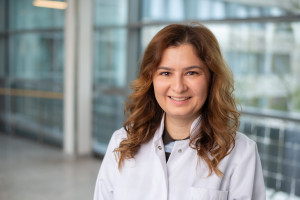
As a Clinical Research Associate on the HI-FIVE project, Anna Ruzhyna supports the conduct of the study and coordinates its procedures.
© HDZ NRW
At the Clinic for General and Interventional Cardiology / Angiology at HDZ NRW, Ruzhyna identifies suitable patients for the study. For HI-FIVE, she is looking for participants with aortic valve stenosis. This condition involves the narrowing of the heart valve between the left ventricle and the aorta (main artery). Those affected undergo transcatheter aortic valve implantation (TAVI). TAVI is a minimally invasive procedure in which the defective heart valve is replaced via a catheter. Study participants must also suffer from heart failure.
To determine who is eligible to participate, Ruzhyna uses inclusion and exclusion criteria. “If participants agree, they first have a consultation with the medical director, after which I organise all further examinations for our study,” says the 41-year-old. Study participants complete a standardised quality-of-life questionnaire for people with heart failure and take the six-minute walk test. The latter involves measuring the distance they can cover in six minutes. For the study, Ruzhyna also takes blood samples from them.
Diverse tasks in everyday study life
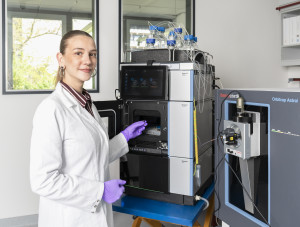
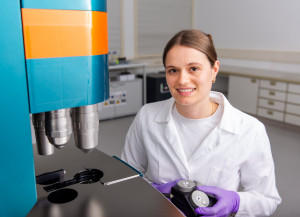
Her work ranges from direct patient care to organising examinations and laboratory analyses. It is precisely this diversity that Ruzhyna particularly appreciates. In the laboratory, she isolates peripheral mononuclear blood cells. These are specific immune cells extracted from the blood. The study physician analyses these for quality and viability. Automated cell counters and flow cytometers now perform most of the cell counting and analysis. “As a student, I used to count everything myself under the microscope. Now, these devices show us exactly how many living cells we have been able to isolate,” she says.
From recruitment to the development of new active substances
Since the start of recruitment in January 2026, the HDZ NRW team has enrolled 27 patients in the HI-FIVE study. The final target is around 500 patients.
HI-FIVE
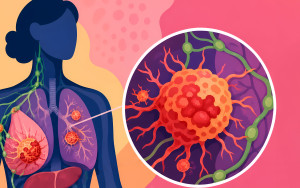
As part of the HI-FIVE project, researchers and physicians at ISAS, Lead Discovery Center GmbH and Herz- und Diabeteszentrum NRW (HDZ) are developing a new therapeutic approach to heart failure. The focus is on GRK5 inhibitors. These active substances are designed to block an enzyme that plays a central role in the disease process and is pathologically overactive in heart failure. The joint project aims to enable more precise treatment of various forms of heart failure in the future, particularly for patients for whom current therapies have been ineffective or for whom there is yet no suitable treatment. HI-FIVE started in 2025, will run for three years and is funded by the EU and the state of North Rhine-Westphalia with 2,1 million euros.
“I’m optimistic that our work can create new opportunities for people with heart failure, for whom there are currently insufficient treatment options,” says Ruzhyna. Therapy has been limited, particularly for individuals with heart failure and preserved pump function. HI-FIVE is addressing this issue in the preclinical field by investigating new active substances that specifically inhibit the key enzyme GRK5 which plays a particularly significant role in heart failure. These GRK5 inhibitors are expected to enable a new form of therapy by weakening overactive enzyme function, thereby counteracting pathological processes in the diseased heart.
Medical path from Ukraine to Germany
Ruzhyna studied medicine in Ukraine. From an early age, she was interested in the development of diseases and new therapies. She had already worked in pharmaceutical research in her home country when she moved to Germany in 2020 for family reasons. After taking a break from her career, she studied German intensively and eventually found her way back into medical research.
At HDZ NRW, she particularly appreciates the support she receives from her team and the opportunity to improve her language skills through her day-to-day work. Her long-term goal is to gain professional recognition in Germany. “There are many opportunities in medicine – the important thing is to be happy with the path you chose.”
(Eske Haverkamp)