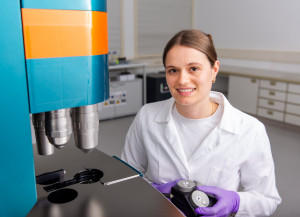
ISAS BFF Uploader
Further articles
Ready, set, slam!
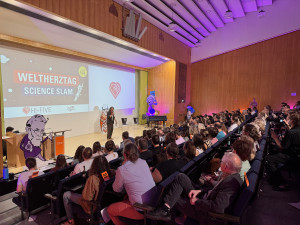
Six science slams, a packed lecture hall and fascinating insights into cardiovascular research: at the HI-FIVE Science Slam on World Heart Day, a clinican and five early-career researchers brought science to the stage. Through humour and engaging storytelling, they brought complex scientific topics to life and gave the audience an insight into HI-FIVE’s research into new approaches to treating heart failure.
In Memory of Günther Tölg
Prof. Dr Günther Tölg has passed away at the age of 97. As director, he led ISAS for over 13 years and played a key role in shaping the institute’s development. ISAS remembers his longstanding contribution with great appreciation.

Endogenous Antioxidant Promotes Breast Cancer Cells in the Lung
Oxidative stress puts pressure on metastasising tumour cells – yet they can activate defence mechanisms to cope with it. Prof. Dr Dr Alpaslan Tasdogan explains the specific challenges faced by breast cancer cells in the lungs. In the interview, he discusses the therapeutic potential of specifically targeting these defence mechanisms of tumour cells in the future.
An AI Agent That Understands the Language of Science
A colleague who never sleeps, never gets tired and completes complex analyses in minutes: a new AI agent for biomedical research is to be developed at ISAS.

Endogenous Antioxidant Promotes Breast Cancer Cells in Lungs
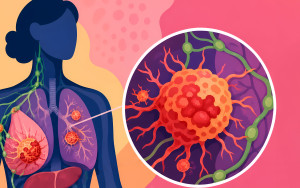
How do breast cancer cells manage to establish themselves in the lungs and survive there? Researchers at ISAS are investigating which metabolic processes help the tumour cells to adapt to their new environment. The findings provide new insights into the early stages of metastases.
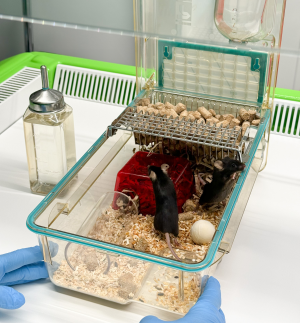
From Human Stem Cells to Mice: Research into New Treatments for Heart Failure
What can human stem cells tell us, and why are mice still essential for developing new therapies for people with heart failure? In our collaborative project HI-FIVE, scientists and physicians work with both animal-free methods and, for some research questions, with mice. In this article marking World Day for Laboratory Animals, our animal welfare officer and the lead researcher of HI-FIVE explain why.
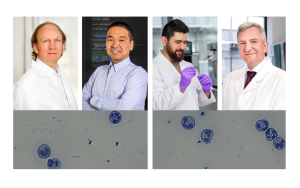
Four Perspectives on a Shared Discovery
Although CD177⁺ and CD177⁻ neutrophils look identical under the microscope, they are in fact not the same. Four of the authors of “CD177 Deficiency Defines a Stable Subtype of Human Neutrophil Granulocytes with Tumour-Promoting Activity” (Advanced Science) explain how they identified the functional differences between these immune cells and which combined analytical methods made their discovery possible in the first place. This insight into their research demonstrates how interdisciplinary collaboration can reveal previously undiscovered information.
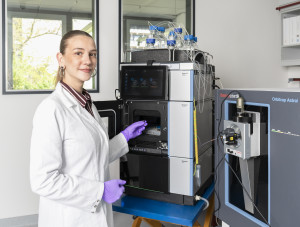
3 Questions for... Neele Rottmann
In the lab, Neele Rottmann prepares human and animal samples for mass spectrometry analysis. As part of the HI-FIVE project, she is helping to identify changes at the protein level in heart failure. Why does she spend so much time in the lab working on separations? The technical assistant shares the answer in this interview.
High-tech against Cardiovascular Diseases: 3D Images of Blood Vessels
How do atherosclerotic plaques form in the coronary arteries? At ISAS, researchers are investigating cellular changes in human coronary arteries using techniques such as 3D imaging. During her internship, early-career researcher Leonie Menzel used a light sheet fluorescence microscope to analyse the spatial distribution of individual cells within the tissue. She thereby gained valuable methodological experience for her Master’s thesis.