Skip to content

Guest at ISAS: Talk with Dr Rita Strack

Dortmund, 6th September 2022

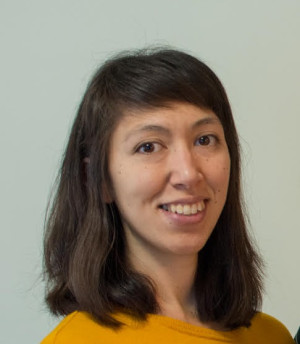
Dr Rita Strack has been a member of the editorial team of the renowned biomedical journal Nature Methods since November 2014. As a senior editor, the biochemist and molecular biologist handles publications on topics like bioimaging, proteomics and RNA, among others.

Soon, the US American is going to share her editorial experience of several years with scientists at ISAS: on Wednesday, September 21, 2022, 2.45 pm, Strack is going to give an insight into the publication processes at Nature Methods (impact factor: 47.99). In her talk, she will reveal which editorial criteria are important when it comes to accepting a paper. In addition, the senior editor will provide tips on excellent methodological publications and answer questions from the auditorium. After the talk, participants will have the opportunity for further exchange with Strack during a get-together incl. a poster session.

Leibniz-Institut für Analytische Wissenschaften – ISAS – e.V.
Campus location: lecture hall
Otto-Hahn-Str. 6b
44227 Dortmund

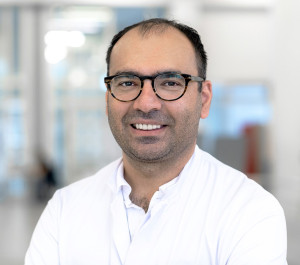
Dr. Rita Strack © Nature Methods

Online participation is possible via the following login data:

Webexhttps://bit.ly/3SJHArA
Meeting-ID: 2730 593 5734
Passwort: N4m2qXmuXK9
More information about the talk & the speaker

Portrait Dr. Rita Strack.

Dr. Rita Strack.

© Nature Methods
Share

Further articles

Four Perspectives on a Shared Discovery

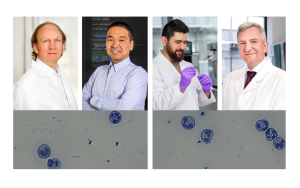
Although CD177⁺ and CD177⁻ neutrophils look identical under the microscope, they are in fact not the same. Four of the authors of “CD177 Deficiency Defines a Stable Subtype of Human Neutrophil Granulocytes with Tumour-Promoting Activity” (Advanced Science) explain how they identified the functional differences between these immune cells and which combined analytical methods made their discovery possible in the first place. This insight into their research demonstrates how interdisciplinary collaboration can reveal previously undiscovered information.

Das Foto zeigt eine Collage mit Porträts von vier Personen und Mikroskopaufnahmen der Immunzellen Neutrophilen Granulozyten; Von oben links nach rechts: Prof. Dr. Matthias Gunzer, Prof. Dr. Jianxu Chen, Dr. Belal Alshaar und Prof. Dr. Albert Sickmann.

3 Questions for Neele Rottmann

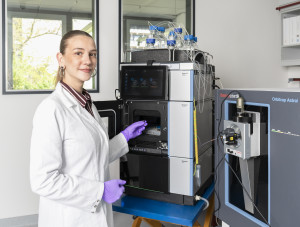
In the lab, Neele Rottmann prepares human and animal samples for mass spectrometry analysis. As part of the HI-FIVE project, she is helping to identify changes at the protein level in heart failure. Why does she spend so much time in the lab working on separations? The technical assistant shares the answer in this interview.

Neele Rottmann is wearing a white lab coat and purple gloves and is operating a mass spectrometry analyser in a laboratory. Next to her is a liquid chromatography system connected to a mass spectrometer via several tubes. There are numerous sample vials on the instrument. As she places a sample into the system, she looks into the camera.

High-tech against Cardiovascular Diseases: 3D Images of Blood Vessels

How do atherosclerotic plaques form in the coronary arteries? At ISAS, researchers are investigating cellular changes in human coronary arteries using techniques such as 3D imaging. During her internship, early-career researcher Leonie Menzel used a light sheet fluorescence microscope to analyse the spatial distribution of individual cells within the tissue. She thereby gained valuable methodological experience for her Master’s thesis.

3 Questions for Lukas Fu

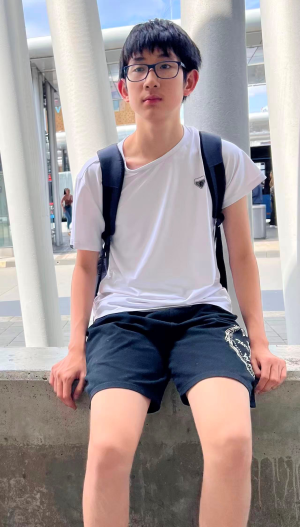
How can AI support the analysis of biomedical images? This was the question Lukas Fu explored during his school internship at ISAS. The 15-year-old also successfully completed his first programming project.

Lukas Fu, a 15-year-old with short black hair. He is wearing glasses and is sitting on a low wall.

Separating Fluorescence Signals Faster and More Precisely with AI

When different fluorescence signals overlap during microscopy, their clear assignment to specific biological structures becomes difficult. To address this common problem, Dr Davide Panzeri is developing AI-based signal separation methods. The biophysicist has been awarded a Marie Skłodowska-Curie Fellowship by the European Union for his promising research project.

Porträt Dr. Davide Panzeri.

Passionate Research, Shaping the Future

How do GRK5 inhibitors work at the cellular level and within the living organism? Biologist Dr Susanne Grund is working with her colleagues at HI-FIVE on a new therapeutic approach for heart failure. In this portrait, she describes what her day-to-day work looks like, balancing research on human stem cells with studies on mice.

ISAS BFF Uploader

What are you doing at ISAS, Theresa?

Why do mice undergo ultrasound examinations of their hearts? What does a typical working day in the lab involve for a technical assistant in the HI-FIVE research project ? And what challenges does the job present? Theresa Pietz provides fascinating insights into her duties, motivations and experiences working with animals.

Study with Heart: A Doctor Bridging Clinic & Laboratory

What is actually happening behind the scenes of a patient trial? Anna Ruzhyna is a clinical research associate who looks after participants with heart failure as part of the HI-FIVE project. She explains how her work helps to develop new therapeutic approaches for the treatment of heart failure.