Dortmund, 11th June 2026
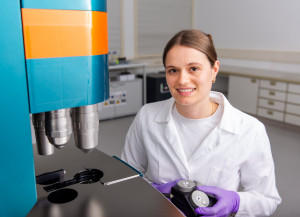
As a technical assistant, Neele Rottmann is working on the HI-FIVE project. The 27-year-old studied environmental monitoring and forensic chemistry at Hamm-Lippstadt University of Applied Sciences and has recently joined the Proteomics research group. So far, she has mainly been preparing samples for the analysis of proteins in the context of heart failure.
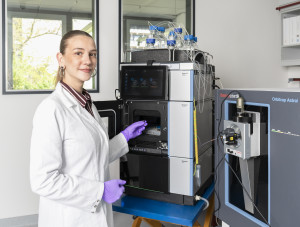
In the laboratory, Neele Rottmann inserts a sample tube for analysis by liquid chromatography (coupled with a mass spectrometer).
© ISAS
1. Which proteins are you concerned with in HI-FIVE and what are your tasks in the lab?
Rottmann: My main task is preparing samples for mass spectrometric analysis. These are human samples and samples from mice. Together with our researchers, I investigate which proteins are present in a sample and in what relative abundances. This means we look at how abundant individual proteins are in comparison to one another. Specifically, we analyse the proteome, meaning the totality of all detectable proteins in a sample, as well as the phosphoproteome. The latter comprises all proteins that have been modified by the attachment of phosphate groups. This modification plays an important role in the regulation of cellular signalling pathways.
A key focus of the HI-FIVE project is comparing samples with and without GRK5 inhibitors. These are drugs that inhibit an enzyme involved in regulating certain signalling pathways in heart failure. By making this comparison, we can understand how processes within the cells change, whether the drug specifically interferes with certain processes, and whether any undesirable effects occur. We are also investigating differences between samples from patients and mice of different age groups and genders. These biological factors can influence how effective a treatment is.
2. How do you prepare the samples?
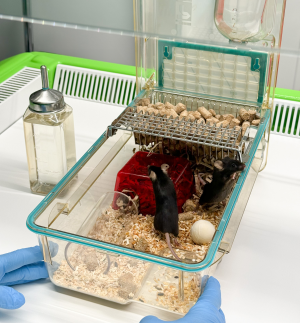
Rottmann: The samples of mouse hearts are from the Cardiovascular Pharmacology research group at ISAS and the samples containing human cells and blood plasma from the Herz- und Diabeteszentrum NRW (HDZ NRW) are deep-frozen and stored at minus 80 degrees to ensure that the proteins they contain remain stable. I start by punching small tissue samples out of the mouse hearts. To access the proteins inside the cells, these must then be broken down using chemical and physical lysis. For this, I use ultrasound, amongst other methods. A so-called sonicator emits high-frequency sound waves into the sample, causing tiny bubbles to form and collapse in the liquid. These mechanical forces break down the cell membranes and release the proteins they contain. I then purify the proteins, separating them from other cellular components and preparing them for analysis. To do this, I follow specific procedures, some of which were developed at ISAS. This is followed by mass spectrometric analysis, for example using liquid chromatography coupled with mass spectrometry (LC-MS) and tandem mass spectrometry (MS/MS). These methods make it possible to identify and quantify thousands of proteins simultaneously.
HI-FIVE
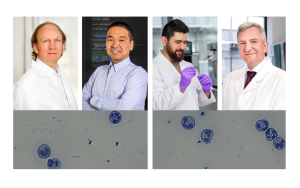
In the HI-FIVE research project, scientists and clinicians from ISAS, Lead Discovery Center GmbH and Herz- und Diabeteszentrum NRW are collaborating on a new therapeutic approach for the treatment of heart failure. The focus is on so-called GRK5 inhibitors, which specifically block a key enzyme that becomes overactive in heart failure.
The aim of the project is to develop new options for more precise treatment of heart failure, particularly in cases where existing drugs are not sufficiently effective. The collaborative project began in 2025. It will run for three years and is funded with around 2.1 million euros by the European Union and the State of North Rhine-Westphalia.
3. What do you particularly like about your work for HI-FIVE?
Rottmann: I find it fascinating to gain an insight into the various sub-projects, for example, how the samples I’m analysing are produced. I also like the fact that I can follow the entire journey of the samples not just from a distance, but also at first hand: from collection through preparation and analysis right through to the subsequent evaluation of the data. This gives you a much better understanding of how the individual steps interlock and what contribution your own work makes to the overall project. I also find the collaboration with our partners, Herz- und Diabeteszentrum NRW and Lead Discovery Center, very enlightening. It gives me insights into different ways of working and allows me to see just how closely application-oriented basic research and clinical research can be linked. It is precisely this combination of practical lab work and a view of the bigger picture that makes the work particularly varied for me.
(The interview was conducted by Eske Haverkamp.)