Skip to content

Invitation to BIGS – Biomedical Image Analysis Graduate Seminar

Dortmund, 16th March 2022

Register now for 'BIGS - Biomedical Image Analysis Graduate Seminar' on March 21, 2022

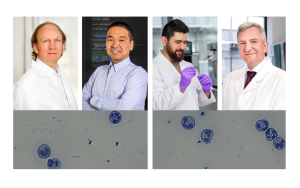
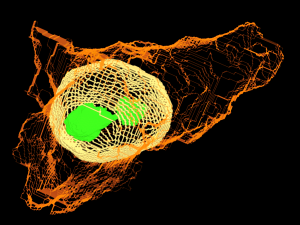
Depending on the microscope, one single sample generates an average of 500 images. Without Artificial Intelligence (AI), one would neither be able to profoundly and quickly analyse, nor efficiently manage the information. Microscopy is just one of many application fields in medical imaging where AI has been continuously revolutionising the processing of enormous amounts of data. Pioneering developments in biomedical data analysis are the topic of 'BIGS - Biomedical Image Analysis Graduate Seminar' on Monday, March 21, 2022, 9 am to 5 pm. The symposium of the University Alliance Ruhr and the Leibniz-Institut für Analytische Wissenschaften – ISAS – e.V. offers young scientists a platform for international exchange. Eleven postdocs and PhD students from the local universities as well as four guest speakers from China, UK, Sweden and the USA will present their work for discussion.

BIGS takes place as a hybrid event to give as many participants as possible the opportunity to contribute online and debate the research ideas. Participation is free of charge, registration via Eventbrite is required.

Guest speakers

  • Prof. Dr. Shanghang Zhang
    Peking University, China
    "Towards machine learning generalization in the open world"

  • Dr. Wei Ouyang
    KTH Royal Institute of Technology, Sweden
    "Human-in-the-loop AI for data-driven life science"

  • Soham Mandal
    EMBL’s European Bioinformatics Institute, UK
    "Cell Segmentation with SplineDist"

  • Prof. Dr. Chao Chen
    Stony Brook University, USA
    tba

For questions about the event please contact Dr Jianxu Chen, head of the AMBIOM working group at ISAS: jianxu.chen@isas.de.
© Jianxu Chen/ISAS
Share

Further articles

Copenhagen: Different Molecules, New Perspectives?

Felix Hormann is spending three months conducting research at the University of Copenhagen. In this interview, the ISAS doctoral student discusses the new perspective he has gained on his lipid research and his exciting day-to-day life as a scientist in Denmark.

Felix Hormann is standing at a crossroads. In the background, there is a traffic sign with writing in Danish.

New Perspectives for Heart Failure Therapy

How are new therapeutic approaches being developed to close the gap in the treatment of patients with heart failure? And what knowledge from clinical practice is crucial for this? Prof. Dr Tanja Rudolph provides insights into her daily work as a cardiologist and talks about her role in the translational research project HI-FIVE, and the future of cardiovascular disease therapy.

PODCAST »NACHGEFORSCHT – DIE LIVESCHALTE INS LABOR« Episode 12: Less Is More, at Least When It Comes to the Number of Cells

PhD student Susmita Ghosh talks about her research on neutrophil granulocytes – tiny immune cells that play a role in both defending the body against infections and inflammatory processes. Instead of working with countless cells, the biologist optimises analytical methods to enable meaningful proteome analyses with an extremely small number of cells. Ghosh explains why ‘less is more’ and what this has to do with modern mass spectrometry in episode 12 of the podcast.

What are you doing at ISAS, Nora?

Nora Pauly is writing her doctoral thesis on the consequences of heart attacks at the joint graduate college of Essen University Hospital and ISAS. With the bed-to-bench-to-bed principle, her work in basic research is closely linked to the everyday clinical practice of caring for heart attack patients.

New Framework for Efficient Image Data Analysis in Biomedicine

How can AI be used optimally in bioimaging research? A team of international researchers and scientists led by Dr Jianxu Chen from ISAS has developed a framework designed to make it easier for biomedical scientists to work with data-centric AI. Using the example of vascular segmentation, the authors of the publication in the journal npj imaging now demonstrate the advantages of the new framework.

3 Questions for Susmita Ghosh

How does gut microbiota affect the immune system? Susmita Ghosh conducts research on proteins and immune cells at ISAS. In this interview, the biologist talks about her work and explains how gut flora and the immune system could affect the outcomes of a stroke.

Susmita Ghosh sitzt am ultrasensitiven Massenspektrometer und stellt eine Proben ein.

Gut Flora & Stroke: How Microorganisms Influence Our Immune System

Which factors can activate immune cells after a stroke? This question was investigated by researchers at University Hospital Essen and ISAS. Their work focused on the gut microbiota.

3 Questions for Dr Ali Ata Tuz

In his doctorate, Dr Ali Ata Tuz researched the causes of immunodeficiency after strokes and was already working closely with ISAS at the time. Following this, he subsequently devoted himself to the behaviour of immune cells in the bioimaging research group at ISAS. In this interview, the physician talks about his path from the clinic to application-oriented basic research.

Dr. Ali Ata Tuz sitzt am Konfokalmikroskop und schaut frontal in die Kamera.. Auf dem Bildschirm nebem dem Mirkoskop sind in grün und violett Mikroskopaufnahmen von einer Probe im Mikroskop zu sehen.

Heart Failure Rarely Occurs on Its Own: ISAS Researchers Develop New Treatment Pillars

The symptoms, subsequent problems and therapeutic challenges of patients with heart failure are increasingly challenging for general practitioners and cardiologists. Doctors are limited in their choice of treatment options, especially for patients with additional diseases. At ISAS, researchers are therefore focussing on broadening the therapeutic spectrum.

Prof. Dr. Kristina Lorenz.