Dortmund, 28th October 2020
Two million euros in EU funding for research on aging processes
With Dr. Milos Filipovic, the Leibniz-Institut für Analytische Wissenschaften - ISAS - e.V. has gained a top researcher for the science location Germany. The biochemist, whose research was awarded two million euros by the European Research Council (ERC), is moving from Bordeaux to Dortmund. With immediate effect, the 38-year-old is going to join the department for Translational Research at ISAS and head the working group Sulfaging. “His research on metabolic biochemistry provides important insights in order to better for example the diagnosis and treatment of age-related diseases. Milos Filipovic's expertise therefore perfectly matches our profile”, says Prof. Dr. Albert Sickmann, ISAS chairman.
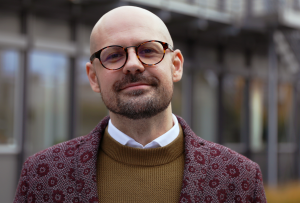
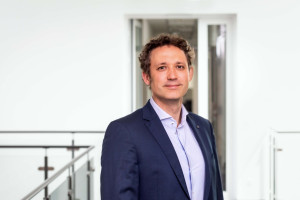
Dr. habil. Milos Filipovic.
© ISAS
Research on signal transmission in cells by hydrogen sulfide
Filipovic conducts research in the fields of biochemistry and neuroscience. He has already received several awards for his work – most recently with the ERC Consolidator Grant. Filipovic and his team investigate the connection between aging processes and so-called gasotransmitter signaling. The gasotransmitters include the gases hydrogen sulfide, nitrogen oxide and carbon monoxide. They act as signal substances within and between cells and play an important role in the human body, for example in controlling the heartbeat or in nerve activities. In Dortmund, Filipovic will concentrate on signal transmission in cells using hydrogen sulfide. In this still young research area, his working group aims to decipher the exact mechanisms of the hydrogen sulfide actions, for example with the help of transgenic worms. Their goal is to find pharmacological methods to slow down ageing processes.
For his move to ISAS the intensive interdisciplinary collaboration was crucial. Filipovic: “Both proteomics and metabolomics shape the institute’s core scientific competences – and they are two of the main tools for my research on aging and hydrogen sulfide.” What he values about Germany are the freedom of science and good conditions for researchers. Filipovic is already familiar with the local scientific system and feels comfortable in Germany. Before he went to France, the 38-year-old completed his habilitation at the Friedrich-Alexander Universität Erlangen-Nürnberg.
Funding of Sulfaging
This project has received funding from the European Research Council (ERC) under the European Union’s Horizon 2020 research and innovation programme (grant agreement No 864921).
About ISAS
The Leibniz-Institut für Analytische Wissenschaften – ISAS – e.V. develops efficient and cost-effective analytical methods for health research. Thus, it contributes to the improvement of the prevention, early diagnosis and therapy of diseases. Overall, the institute strives to advance precision medicine by
combining knowledge from different fields such as chemistry, biology, pharmacology, physics and computer science. The institute works closely with universities in Germany and abroad, for instance through joint appointments. It also cooperates with national and international partners from science and industry. ISAS was founded in 1952 and has around 200 employees.