We have compiled photos, illustrations, podcast episodes and other information in our information centre.
To the Information Centre

Cancer treatments can cause long-term damage to the heart – sometimes with life-threatening consequences. Scientists and clinicians at the new Leibniz Cardio-Oncology Campus are researching how such damage can be detected early and prevented. Their aim is to find new ways to protect the heart as effectively as possible without compromising cancer treatment.
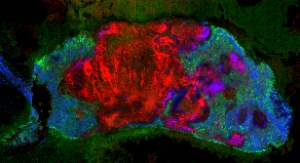
Why do individual colorectal cancer cells form metastases? An international research team, including researchers from ISAS, has identified a mechanism whereby the body’s own synthesis of ceramides can promote the metastasis of colorectal cancer. The study also revealed the role played by the fat content of the diet. The researchers have now published the results of the preclinical model in Science.
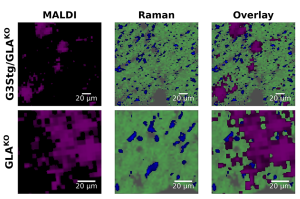
A new technique developed at ISAS combines Raman microscopy and mass spectrometry imaging, and it demonstrates that, for the first time, the spatial distribution of lipids can be visualised at cellular and subcellular levels – including further essential information. The new analytical method holds high potential for the diagnosis and treatment of conditions such as Fabry disease, in which molecules undergo local changes within the tissue.
We have compiled photos, illustrations, podcast episodes and other information in our information centre.
To the Information CentreOur researchers and cooperation partners open the doors to their laboratories and give an insight into the work and results of a research year.
To our Annual Reports