Skip to content

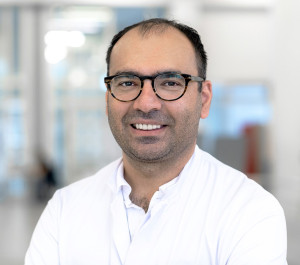
Guest at ISAS: Dr. Thomas Joos from the NMI

Dortmund, 12th May 2022

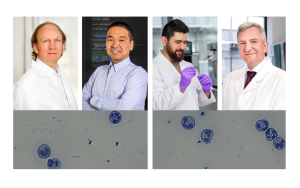
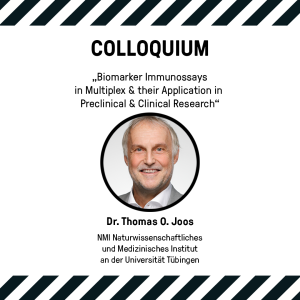
On Thursday, May 19, 2022, 1 pm, ISAS will be hosting a colloquium with Dr Thomas Joos. The biochemist is deputy director of the NMI Natural and Medical Sciences Institute at the University of Tübingen. The colloquium on "Biomarker Immunossays in Multiplex and their Application in Preclinical and Clinical Research" will cover a broad spectrum of classical and emerging immunassays. In addition, Joos will highlight the advantages of the different methods by addressing biological issues for serological screening approaches, drug-induced organ damage and oncology.

ISAS will broadcast the colloquium via Webex. Participation is possible via the following login data:

https://bit.ly/3FBdsnv
Meeting ID 2734 445 2256
Password jPqTVyXP722

More information on the colloquium & speaker
Share

Further articles

Laboratory Meets Clinic: Understanding Heart Function with Stem Cells

How can new therapeutic approaches for heart failure be developed more effectively? Stem cell research plays a central role in the HI-FIVE project. In this interview, PD Dr Anna Klinke (Herz- und Diabeteszentrum NRW) talks about her work between the lab and the clinic. She explains how the versatility of stem cells enables heart and vascular cells to be obtained from individual patients' blood and why this is an important step in investigating the specific effects of new active substances.

What are you doing at ISAS, Kevin?

What changes take place in heart muscle cells when a left ventricular assist device is used? ISAS doctoral student Kevin Hau (28) is tackling this question by researching the consequences of heart attacks using various omics analyses.

Kevin Hau is wearing a white coat bearing the ISAS logo. He is standing next to a microscope in a laboratory. In the lower left corner of the image, a computer screen can be seen. Open on the monitor is a microscopic image of reddish tissue.

Copenhagen: Different Molecules, New Perspectives?

Felix Hormann is spending three months conducting research at the University of Copenhagen. In this interview, the ISAS doctoral student discusses the new perspective he has gained on his lipid research and his exciting day-to-day life as a scientist in Denmark.

Felix Hormann is standing at a crossroads. In the background, there is a traffic sign with writing in Danish.

New Perspectives for Heart Failure Therapy

How are new therapeutic approaches being developed to close the gap in the treatment of patients with heart failure? And what knowledge from clinical practice is crucial for this? Prof. Dr Tanja Rudolph provides insights into her daily work as a cardiologist and talks about her role in the translational research project HI-FIVE, and the future of cardiovascular disease therapy.

PODCAST »NACHGEFORSCHT – DIE LIVESCHALTE INS LABOR« Episode 12: Less Is More, at Least When It Comes to the Number of Cells

PhD student Susmita Ghosh talks about her research on neutrophil granulocytes – tiny immune cells that play a role in both defending the body against infections and inflammatory processes. Instead of working with countless cells, the biologist optimises analytical methods to enable meaningful proteome analyses with an extremely small number of cells. Ghosh explains why ‘less is more’ and what this has to do with modern mass spectrometry in episode 12 of the podcast.

What are you doing at ISAS, Nora?

Nora Pauly is writing her doctoral thesis on the consequences of heart attacks at the joint graduate college of Essen University Hospital and ISAS. With the bed-to-bench-to-bed principle, her work in basic research is closely linked to the everyday clinical practice of caring for heart attack patients.

New Framework for Efficient Image Data Analysis in Biomedicine

How can AI be used optimally in bioimaging research? A team of international researchers and scientists led by Dr Jianxu Chen from ISAS has developed a framework designed to make it easier for biomedical scientists to work with data-centric AI. Using the example of vascular segmentation, the authors of the publication in the journal npj imaging now demonstrate the advantages of the new framework.

3 Questions for Susmita Ghosh

How does gut microbiota affect the immune system? Susmita Ghosh conducts research on proteins and immune cells at ISAS. In this interview, the biologist talks about her work and explains how gut flora and the immune system could affect the outcomes of a stroke.

Susmita Ghosh sitzt am ultrasensitiven Massenspektrometer und stellt eine Proben ein.

Gut Flora & Stroke: How Microorganisms Influence Our Immune System

Which factors can activate immune cells after a stroke? This question was investigated by researchers at University Hospital Essen and ISAS. Their work focused on the gut microbiota.