Dortmund, 14th October 2026
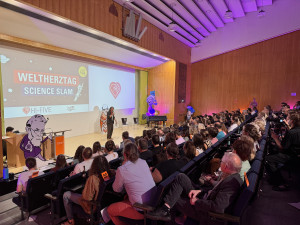
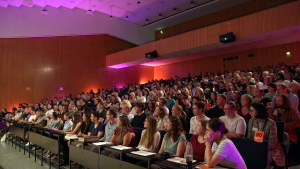
More than 370 hearts were beating with excitement in the audience at the HI-FIVE Science Slam on World Heart Day—six of them probably especially loudly. For the first time, Dr. Alexander Stilkenböhmer and Tibor Maske from the Herz- und Diabeteszentrum NRW (HDZ NRW), as well as Dr. Susanne Grund, Rowena Gänsler, Malin Hedtstück, and Carlotta Peddinghaus from ISAS, stepped on stage as slammers. With humor and vivid stories, they demonstrated the diversity of research in the HI-FIVE project—and why new approaches to treating heart failure are needed.
Since March, the six of them had been preparing for their presentation in intensive workshops. Alexander Stilkenböhmer kicked off the evening with Rot-Marie and her grandmother, who has a heart condition. Fatigue, nocturia, and dyspnea: the resident physician explained the most important signs of chronic heart failure. At the same time, he highlighted the treatment options available today—and why further research is needed.
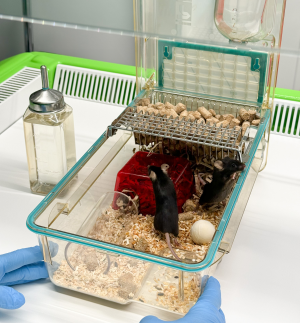
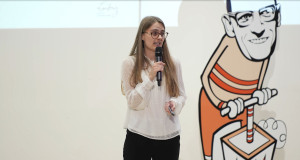
From the clinic, it was straight to the lab. Carlotta Peddinghaus took the audience on a tour of the “Mouse Gym”: How can mice’s fitness help make a specific form of heart failure measurable? The biologist demonstrated what the various stations in the lab look like: strength testing, a running track, and blood pressure measurement. What mice normally undergo in the laboratory was performed on stage by two volunteers. Peddinghaus also presented the key enzyme GRK5 as a potential starting point for a future therapeutic approach.
© ISAS
© ISAS
© ISAS
© ISAS
© ISAS
© ISAS
© ISAS
In Dr Susanne Grund’s slam, the focus then shifted to the big career question—the journey of a pluripotent stem cell: Whether as a liver cell in the “detox business,” as a nerve cell working for “the post and signal office,” or in a never-ending job as a heart muscle cell—all doors are open to a stem cell. In the lab, however, Grund explained, scientists determine the career path. This is also the case in the HI-FIVE project, where she is conducting research using, among other things, heart muscle cells derived from stem cells.
“It’s great that all the slam poets had the courage to take to the stage today! It’s important—but also challenging—to convey complex scientific topics in this way,” Prof. Dr. Kristina Lorenz, HI-FIVE project coordinator and head of the Cardiovascular Pharmacology research group at ISAS, was delighted to say during the break.
Experiencing Heart Health
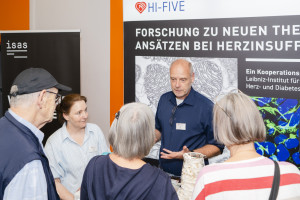
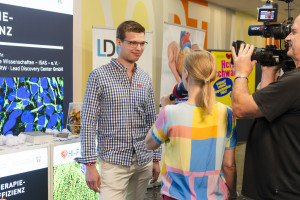
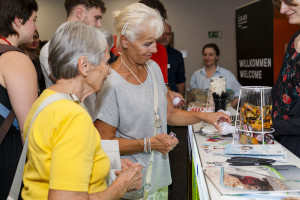
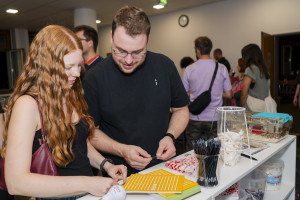
At the same time, in the foyer, there was an opportunity to find out more about the HI-FIVE project and to chat with those involved in the supporting programme. A nurse from the HDZ NRW who specializes in heart failure answered questions about the condition. The Computer Vision and Robotics Department at Dortmund University of Applied Sciences and Arts provided insights into the use of AI and 3D imaging in cardiac surgery.
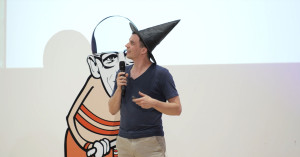
Through his story of the "Heart Brothers", biochemist Tibor Maske illustrated what happens in right heart failure – and why our understanding of the condition is still far from complete.
© ISAS
What happens in cases of right-sided heart failure?
After the break, Tibor Maske transported the audience into the world of the “Heart Brothers.” In a fairy-tale-like story, the biochemist compared the left and right sides of the heart and demonstrated what happens when one of them runs out of energy. Even though the story had a happy ending for “Brother Right,” Maske made it clear: Right heart failure is still far from being fully understood.
Rowena Gänsler then turned the attention to the molecular level. Her superhero: the ERK protein. In superhero school, it learns to regulate cell growth and gene activity. In her slam, the biochemist demonstrated what happens when this signaling pathway becomes unbalanced.
The audience chooses the winner
In the end, the applause decided it. “A Match for the Heart” secured Malin Hedtstück the victory. In her slam, the biologist set out on a specific search for a partner: Which active substance pairs well with a molecule to inhibit harmful signaling pathways without being ineffective, toxic, or both at the same time? But a potential active substance is still a long way from being a finished drug—or as Malin Hedtstück put it: “A match isn’t necessarily true love.”
Science That Inspires
In addition to all the different stories, it was above all the shared enthusiasm for the topic that permeated the entire evening: “The evening impressively demonstrated how a clinical question gives rise to research, step by step. The atmosphere was great, and there were a lot of interested people there,” says Prof. Dr. Tanja Rudolph, a cardiologist at the Heart and Diabetes Center NRW and clinical research director for the HI-FIVE research project, summarizing the evening.
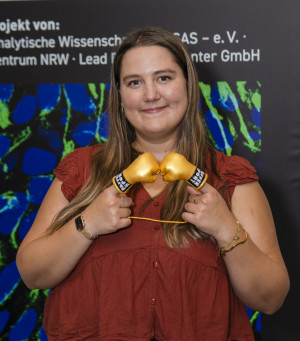
With her slam "A Match for the Heart", Malin Hedtstück took the audience on a special quest: the search for the right active ingredient. Her performance earned her the win that evening.
© ISAS
HI-FIVE
As part of the HI-FIVE collaborative project, researchers and clinicians at ISAS are working alongside Lead Discovery Center GmbH and the Heart and Diabetes Centre NRW on a new therapeutic approach to heart failure. The aim is to be able to treat various forms of heart failure more precisely in future – particularly in patients for whom available treatments have so far proved insufficient, or for whom there is no suitable treatment. The focus is on GRK5 inhibitors which target a key enzyme that becomes overactivated in cases of heart failure.
“HI-FIVE – GRK5 inhibitors for the treatment of various forms of heart failure” was launched in July 2025. The North Rhine-Westphalia state government and the European Union are funding the three-year project with approximately 2.1 million euros.
(Isabell Klitzsch)