Skip to content

Dorit Günther appointed to the ISAS Executive Board

Dortmund, 15th January 2025

ISAS's Supervisory Board appointed Dorit Günther to the institute's Executive Board on January 13, 2025. Günther will assume the role of Chief Financial Officer with immediate effect. The new position is also associated with the management of the infrastructure. The lawyer has been working at ISAS since 2005. Before her appointment to the Executive Board alongside Prof Dr Albert Sickmann, Günther headed the department of Human Resources, IP Management & Communications. 

Share

Further articles

Endogenous Antioxidant Promotes Breast Cancer Cells in the Lung

Oxidative stress puts pressure on metastasising tumour cells – yet they can activate defence mechanisms to cope with it. Prof. Dr Dr Alpaslan Tasdogan explains the specific challenges faced by breast cancer cells in the lungs. In the interview, he discusses the therapeutic potential of specifically targeting these defence mechanisms of tumour cells in the future.

Prof. Dr. Dr. Apaslan Tasdogan.

An AI Agent That Understands the Language of Science

A colleague who never sleeps, never gets tired and completes complex analyses in minutes: a new AI agent for biomedical research is to be developed at ISAS.

Endogenous Antioxidant Promotes Breast Cancer Cells in Lungs

How do breast cancer cells manage to establish themselves in the lungs and survive there? Researchers at ISAS are investigating which metabolic processes help the tumour cells to adapt to their new environment. The findings provide new insights into the early stages of metastases.

From Human Stem Cells to Mice: Research into New Treatments for Heart Failure

What can human stem cells tell us, and why are mice still essential for developing new therapies for people with heart failure? In our collaborative project HI-FIVE, scientists and physicians work with both animal-free methods and, for some research questions, with mice. In this article marking World Day for Laboratory Animals, our animal welfare officer and the lead researcher of HI-FIVE explain why.

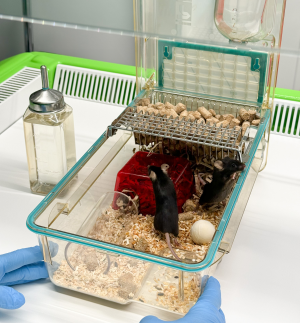
Mäuse in einer Haltungseinheit mit rotem Häuschen, Nistmaterial, Holzkugel und transparenter Röhre zur Beschäftigung und als Rückzugsmöglichkeit.

Four Perspectives on a Shared Discovery

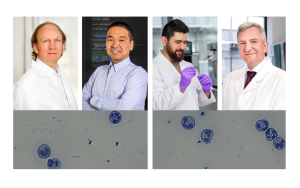
Although CD177⁺ and CD177⁻ neutrophils look identical under the microscope, they are in fact not the same. Four of the authors of “CD177 Deficiency Defines a Stable Subtype of Human Neutrophil Granulocytes with Tumour-Promoting Activity” (Advanced Science) explain how they identified the functional differences between these immune cells and which combined analytical methods made their discovery possible in the first place. This insight into their research demonstrates how interdisciplinary collaboration can reveal previously undiscovered information.

Das Foto zeigt im oberen Teil Porträts von vier Wissenschaftlern. Von links nach rechts: Prof. Dr. Matthias Gunzer, Prof. Dr. Jianxu Chen, Dr. Belal Alshaar, Prof. Dr. Albert Sickmann. Im Teil unter den Porträts sind Mikroskopaufnahmen von CD177-definierten Neutrophilen zu sehen.

3 Questions for... Neele Rottmann

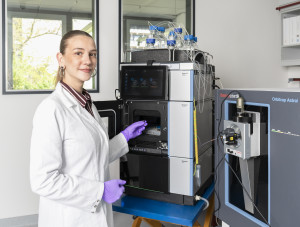
In the lab, Neele Rottmann prepares human and animal samples for mass spectrometry analysis. As part of the HI-FIVE project, she is helping to identify changes at the protein level in heart failure. Why does she spend so much time in the lab working on separations? The technical assistant shares the answer in this interview.

Neele Rottmann is wearing a white lab coat and purple gloves and is operating a mass spectrometry analyser in a laboratory. Next to her is a liquid chromatography system connected to a mass spectrometer via several tubes. There are numerous sample vials on the instrument. As she places a sample into the system, she looks into the camera.

High-tech against Cardiovascular Diseases: 3D Images of Blood Vessels

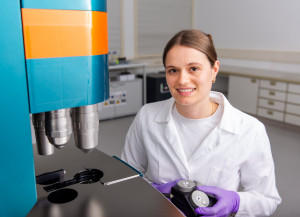
How do atherosclerotic plaques form in the coronary arteries? At ISAS, researchers are investigating cellular changes in human coronary arteries using techniques such as 3D imaging. During her internship, early-career researcher Leonie Menzel used a light sheet fluorescence microscope to analyse the spatial distribution of individual cells within the tissue. She thereby gained valuable methodological experience for her Master’s thesis.

3 Questions for Lukas Fu

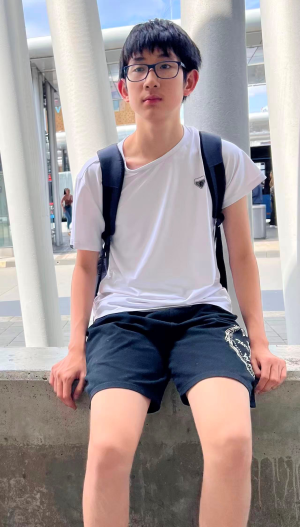
How can AI support the analysis of biomedical images? This was the question Lukas Fu explored during his school internship at ISAS. The 15-year-old also successfully completed his first programming project.

Lukas Fu, a 15-year-old with short black hair. He is wearing glasses and is sitting on a low wall.

Separating Fluorescence Signals Faster and More Precisely with AI

When different fluorescence signals overlap during microscopy, their clear assignment to specific biological structures becomes difficult. To address this common problem, Dr Davide Panzeri is developing AI-based signal separation methods. The biophysicist has been awarded a Marie Skłodowska-Curie Fellowship by the European Union for his promising research project.

Porträt Dr. Davide Panzeri.