Skip to content

Physicist Elen Tolstik Conducts Research for the Heart

Dortmund, 11th February 2021

There are around 1,400 kilometers between Minsk, home of Elen Tolstik, postdoc at ISAS, and the institute's headquarters in Dortmund. Her way to the city in the Ruhr area led the mother of two young children first to Jena for her doctorate before she came to ISAS in 2018. Since then, the physicist has been working in the cardiovascular pharmacology group.

Search for the molecular fingerprint

Tolstik is researching biomarkers with which common diseases such as cardiovascular diseases can be detected earlier and better treated. To do this, she uses vibrational spectroscopic imaging and high-resolution microscopy. With these two instruments, the scientist examines lipids and proteins in cells and tissues of healthy and sick mice. How many of these fats and proteins are present when and where in a sample provide - as a molecular fingerprint - information about the cause and course of the disease. The animals' therapy and the analysis of the local effects of the drugs in their body are also part of Tolstik's work.

The 36-year-old's research is not only important for the quality of life of people with cardiovascular diseases. Her scientific results help to better understand and treat other diseases with similar deposits of proteins and lipids in the future.
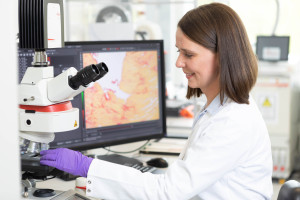
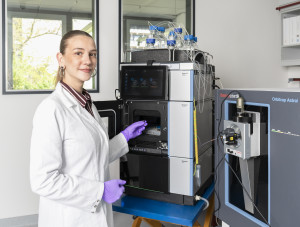
Elen Tolstik forscht als Physikerin nach Biomarkern bei Herz-Kreislauf-Erkrankungen.

Elen Tolstik forscht als Physikerin nach Biomarkern bei Herz-Kreislauf-Erkrankungen.

© ISAS
Share

Further articles

What are you doing at ISAS, Kevin?

What changes take place in heart muscle cells when a left ventricular assist device is used? ISAS doctoral student Kevin Hau (28) is tackling this question by researching the consequences of heart attacks using various omics analyses.

Kevin Hau is wearing a white coat bearing the ISAS logo. He is standing next to a microscope in a laboratory. In the lower left corner of the image, a computer screen can be seen. Open on the monitor is a microscopic image of reddish tissue.

Copenhagen: Different Molecules, New Perspectives?

Felix Hormann is spending three months conducting research at the University of Copenhagen. In this interview, the ISAS doctoral student discusses the new perspective he has gained on his lipid research and his exciting day-to-day life as a scientist in Denmark.

Felix Hormann is standing at a crossroads. In the background, there is a traffic sign with writing in Danish.

New Perspectives for Heart Failure Therapy

How are new therapeutic approaches being developed to close the gap in the treatment of patients with heart failure? And what knowledge from clinical practice is crucial for this? Prof. Dr Tanja Rudolph provides insights into her daily work as a cardiologist and talks about her role in the translational research project HI-FIVE, and the future of cardiovascular disease therapy.

PODCAST »NACHGEFORSCHT – DIE LIVESCHALTE INS LABOR« Episode 12: Less Is More, at Least When It Comes to the Number of Cells

PhD student Susmita Ghosh talks about her research on neutrophil granulocytes – tiny immune cells that play a role in both defending the body against infections and inflammatory processes. Instead of working with countless cells, the biologist optimises analytical methods to enable meaningful proteome analyses with an extremely small number of cells. Ghosh explains why ‘less is more’ and what this has to do with modern mass spectrometry in episode 12 of the podcast.

What are you doing at ISAS, Nora?

Nora Pauly is writing her doctoral thesis on the consequences of heart attacks at the joint graduate college of Essen University Hospital and ISAS. With the bed-to-bench-to-bed principle, her work in basic research is closely linked to the everyday clinical practice of caring for heart attack patients.

New Framework for Efficient Image Data Analysis in Biomedicine

How can AI be used optimally in bioimaging research? A team of international researchers and scientists led by Dr Jianxu Chen from ISAS has developed a framework designed to make it easier for biomedical scientists to work with data-centric AI. Using the example of vascular segmentation, the authors of the publication in the journal npj imaging now demonstrate the advantages of the new framework.

3 Questions for Susmita Ghosh

How does gut microbiota affect the immune system? Susmita Ghosh conducts research on proteins and immune cells at ISAS. In this interview, the biologist talks about her work and explains how gut flora and the immune system could affect the outcomes of a stroke.

Susmita Ghosh sitzt am ultrasensitiven Massenspektrometer und stellt eine Proben ein.

Gut Flora & Stroke: How Microorganisms Influence Our Immune System

Which factors can activate immune cells after a stroke? This question was investigated by researchers at University Hospital Essen and ISAS. Their work focused on the gut microbiota.

3 Questions for Dr Ali Ata Tuz

In his doctorate, Dr Ali Ata Tuz researched the causes of immunodeficiency after strokes and was already working closely with ISAS at the time. Following this, he subsequently devoted himself to the behaviour of immune cells in the bioimaging research group at ISAS. In this interview, the physician talks about his path from the clinic to application-oriented basic research.

Dr. Ali Ata Tuz sitzt am Konfokalmikroskop und schaut frontal in die Kamera.. Auf dem Bildschirm nebem dem Mirkoskop sind in grün und violett Mikroskopaufnahmen von einer Probe im Mikroskop zu sehen.