Contact
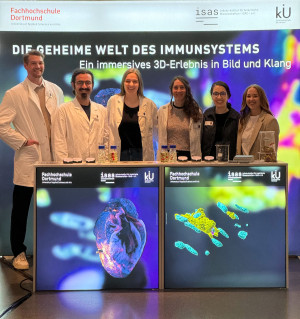
Diving into the smallest structures of the heart via microscope images? This was possible at the first Dortmund Science Night. "The secret world of the immune system", the immersive 3D experience by storyLab kiU at Fachhochschule Dortmund University of Applied Sciences and Arts and ISAS, gave visitors the chance to experience immune cells up close after a heart attack.
The format "Book a Scientist" offers those interested in science the opportunity to book individual appointments with researchers within the Leibniz Association. Among them are two ISAS researchers. Their topics are "overzealous" immune cells after a heart attack and animal experiments and their alternatives.
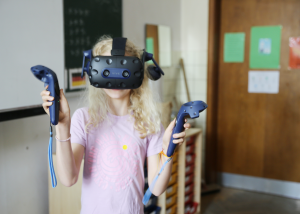
What actually is reality? How do we perceive our environment? And how can augmented reality support researchers in their work? Along with class 3a of the Don Bosco elementary school in Bochum, two ISAS researchers explored these questions.
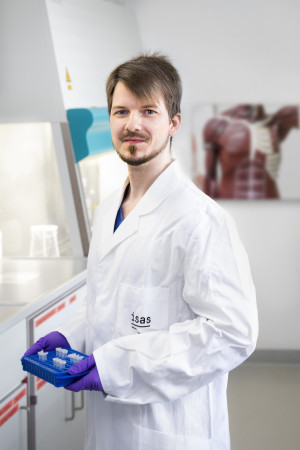
Two mutations in the genetic material of a boy lead to the rare neuromuscular disease NEDHFBA. Investigations of the young patient's samples by researchers at Essen University Hospital and ISAS shed light on the previously unrecognized mechanisms behind the symptoms: Proteins influence the development of the rare disease.
Why is it exciting to decode the lipid signature of individual cells? And which cell type is particularly suitable for allowing this process? Prof Dr Sven Heiles gives the answers in an interview.
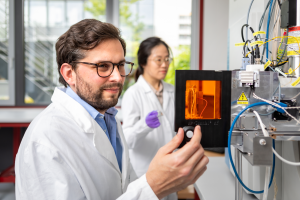
Microglial cells, the immune cells of the central nervous system, are known for their different appearances. In order to demonstrate this heterogeneity for the first time at the lipid and thus metabolic level for individual cells, a team of researchers has set itself a special analysis goal: Decoding the unique and "fatty" signatures of individual cells.