Skip to content

Sven Heiles Receives Justus Liebig University Giessen Award

Dortmund, 29th November 2022
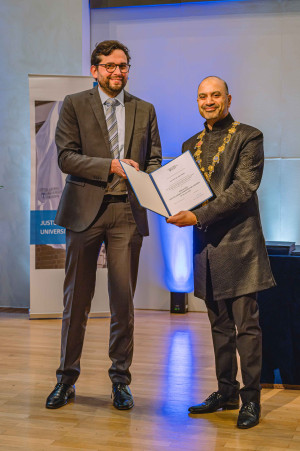
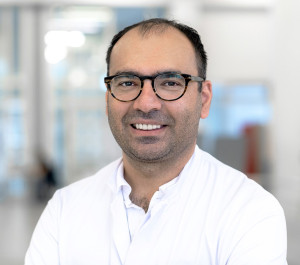
JLU-Präsident Prof. Dr. Joybrato Mukherjee überreicht Prof. Dr. Sven Heiles die Urkunde zum JLU-Preis beim akademischen Festakt in Gießen.

At the academic ceremony in Gießen, JLU President Prof Dr Joybrato Mukherjee presents Prof Dr Sven Heiles (left) with the award certificate.

© JLU / Roland Duss

ISAS congratulates Prof Dr Sven Heiles on his Justus Liebig University (JLU) Giessen Award. The 38-year-old received the prize at the JLU's academic ceremony past Friday in recognition of his work during his habilitation on the structure and spatial distribution of lipids ("Lipid structures and spatial distributions elucidated by high-performance mass spectrometry") as well as previous scientific achievements. The chemist shares the 5,000 euro award in the category of natural sciences and medicine with another winner.

Heiles has been working at ISAS since August 1, 2022. In Dortmund, he heads the junior research group Lipidomics. Prior to his appointment there, he worked at the University of California, Berkeley, and more recently at JLU. In Gießen, Heiles submitted his habilitation thesis in analytical chemistry in May of this year.

Share

Further articles

3 Questions for Neele Rottmann

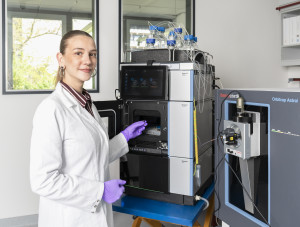
In the lab, Neele Rottmann prepares human and animal samples for mass spectrometry analysis. As part of the HI-FIVE project, she is helping to identify changes at the protein level in heart failure. Why does she spend so much time in the lab working on separations? The technical assistant shares the answer in this interview.

Neele Rottmann is wearing a white lab coat and purple gloves and is operating a mass spectrometry analyser in a laboratory. Next to her is a liquid chromatography system connected to a mass spectrometer via several tubes. There are numerous sample vials on the instrument. As she places a sample into the system, she looks into the camera.

High-tech against Cardiovascular Diseases: 3D Images of Blood Vessels

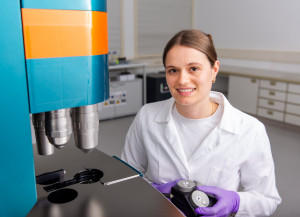
How do atherosclerotic plaques form in the coronary arteries? At ISAS, researchers are investigating cellular changes in human coronary arteries using techniques such as 3D imaging. During her internship, early-career researcher Leonie Menzel used a light sheet fluorescence microscope to analyse the spatial distribution of individual cells within the tissue. She thereby gained valuable methodological experience for her Master’s thesis.

3 Questions for Lukas Fu

How can AI support the analysis of biomedical images? This was the question Lukas Fu explored during his school internship at ISAS. The 15-year-old also successfully completed his first programming project.

Lukas Fu, a 15-year-old with short black hair. He is wearing glasses and is sitting on a low wall.

Separating Fluorescence Signals Faster and More Precisely with AI

When different fluorescence signals overlap during microscopy, their clear assignment to specific biological structures becomes difficult. To address this common problem, Dr Davide Panzeri is developing AI-based signal separation methods. The biophysicist has been awarded a Marie Skłodowska-Curie Fellowship by the European Union for his promising research project.

Porträt Dr. Davide Panzeri.

Passionate Research, Shaping the Future

How do GRK5 inhibitors work at the cellular level and within the living organism? Biologist Dr Susanne Grund is working with her colleagues at HI-FIVE on a new therapeutic approach for heart failure. In this portrait, she describes what her day-to-day work looks like, balancing research on human stem cells with studies on mice.

ISAS BFF Uploader

What are you doing at ISAS, Theresa?

Why do mice undergo ultrasound examinations of their hearts? What does a typical working day in the lab involve for a technical assistant in the HI-FIVE research project ? And what challenges does the job present? Theresa Pietz provides fascinating insights into her duties, motivations and experiences working with animals.

Study with Heart: A Doctor Bridging Clinic & Laboratory

What is actually happening behind the scenes of a patient trial? Anna Ruzhyna is a clinical research associate who looks after participants with heart failure as part of the HI-FIVE project. She explains how her work helps to develop new therapeutic approaches for the treatment of heart failure.

Laboratory Meets Clinic: Understanding Heart Function with Stem Cells

How can new therapeutic approaches for heart failure be developed more effectively? Stem cell research plays a central role in the HI-FIVE project. In this interview, PD Dr Anna Klinke (Herz- und Diabeteszentrum NRW) talks about her work between the lab and the clinic. She explains how the versatility of stem cells enables heart and vascular cells to be obtained from individual patients' blood and why this is an important step in investigating the specific effects of new active substances.