Skip to content

Bone research: ISAS participates in the new "DIONE" Collaborative Research Centre

Dortmund, 1st December 2023

What is the connection between our immune system and bone fractures? Why can autoimmune diseases such as rheumatoid arthritis, illnesses such as psoriatic arthritis or chronic inflammatory bowel diseases affect the skeleton? For the first time, scientists will be investigating these questions in the new Collaborative Research Centre (CRC) / Transregio 369 "DIONE". Researchers at Friedrich-Alexander-Universität (FAU) Erlangen-Nürnberg, Technische Universität Dresden, ISAS and the University of Ulm will be looking into inflammation-induced bone degeneration. The German Research Foundation is funding "DIONE – DegeneratIon of bONE induced by inflammation" for an initial period of four years.

It is known that the immune system reacts to inflammation and releases various mediators such as metabolites. The latter have an effect on bone remodelling by influencing the balance between osteoblasts (bone-building cells) and osteoclasts (bone-degrading cells). However, how exactly the intracellular and extracellular regulatory circuits control inflammation and skeletal reactions has not yet been explored. The scientists at DIONE want to change this by incorporating the latest developments and findings on inflammatory diseases from immunology and bone biology into their research project.

This is why researchers at ISAS and FAU will use various microscopy techniques to investigate whether different osteoclast subpopulations have different activation profiles and functions in addition to their different origins. "We want to find out more about the individual regulatory mechanisms of different osteoclast subtypes during different inflammatory processes and their influence on disease-specific bone damage. We would like to use these new findings to identify potential targets for more specific therapies for various skeletal-associated diseases such as rheumatoid arthritis and osteoporosis," says Prof Dr Anika Grüneboom from the ISAS Bioimaging research group. Together with Prof Dr Gerhard Krönke (FAU / Charité - Universitätsmedizin Berlin), she is leading the corresponding "DIONE" sub-project.
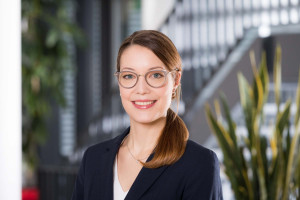
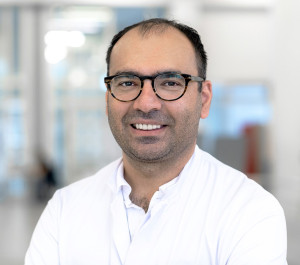
Prof Dr Anika Grüneboom

© ISAS / Hannes Woidich
Share

Further articles

Passionate Research, Shaping the Future

How do GRK5 inhibitors work at the cellular level and within the living organism? Biologist Dr Susanne Grund is working with her colleagues at HI-FIVE on a new therapeutic approach for heart failure. In this portrait, she describes what her day-to-day work looks like, balancing research on human stem cells with studies on mice.

ISAS BFF Uploader

What are you doing at ISAS, Theresa?

Why do mice undergo ultrasound examinations of their hearts? What does a typical working day in the lab involve for a technical assistant in the HI-FIVE research project ? And what challenges does the job present? Theresa Pietz provides fascinating insights into her duties, motivations and experiences working with animals.

Study with Heart: A Doctor Bridging Clinic & Laboratory

What is actually happening behind the scenes of a patient trial? Anna Ruzhyna is a clinical research associate who looks after participants with heart failure as part of the HI-FIVE project. She explains how her work helps to develop new therapeutic approaches for the treatment of heart failure.

Laboratory Meets Clinic: Understanding Heart Function with Stem Cells

How can new therapeutic approaches for heart failure be developed more effectively? Stem cell research plays a central role in the HI-FIVE project. In this interview, PD Dr Anna Klinke (Herz- und Diabeteszentrum NRW) talks about her work between the lab and the clinic. She explains how the versatility of stem cells enables heart and vascular cells to be obtained from individual patients' blood and why this is an important step in investigating the specific effects of new active substances.

What are you doing at ISAS, Kevin?

What changes take place in heart muscle cells when a left ventricular assist device is used? ISAS doctoral student Kevin Hau (28) is tackling this question by researching the consequences of heart attacks using various omics analyses.

Kevin Hau is wearing a white coat bearing the ISAS logo. He is standing next to a microscope in a laboratory. In the lower left corner of the image, a computer screen can be seen. Open on the monitor is a microscopic image of reddish tissue.

Copenhagen: Different Molecules, New Perspectives?

Felix Hormann is spending three months conducting research at the University of Copenhagen. In this interview, the ISAS doctoral student discusses the new perspective he has gained on his lipid research and his exciting day-to-day life as a scientist in Denmark.

Felix Hormann is standing at a crossroads. In the background, there is a traffic sign with writing in Danish.

New Perspectives for Heart Failure Therapy

How are new therapeutic approaches being developed to close the gap in the treatment of patients with heart failure? And what knowledge from clinical practice is crucial for this? Prof. Dr Tanja Rudolph provides insights into her daily work as a cardiologist and talks about her role in the translational research project HI-FIVE, and the future of cardiovascular disease therapy.

PODCAST »NACHGEFORSCHT – DIE LIVESCHALTE INS LABOR« Episode 12: Less Is More, at Least When It Comes to the Number of Cells

PhD student Susmita Ghosh talks about her research on neutrophil granulocytes – tiny immune cells that play a role in both defending the body against infections and inflammatory processes. Instead of working with countless cells, the biologist optimises analytical methods to enable meaningful proteome analyses with an extremely small number of cells. Ghosh explains why ‘less is more’ and what this has to do with modern mass spectrometry in episode 12 of the podcast.