Skip to content

3 Questions for Dr Christopher Nelke

Dortmund, 27th February 2024

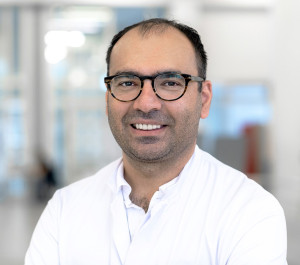
Dr Christopher Nelke is an assistant physician and research associate at the Clinic for Neurology at Düsseldorf University Hospital (Universitätsklinikum Düsseldorf, UKD). His research interests include neuromuscular diseases such as myasthenia gravis. The medical practitioner participates in the Clinician Scientist programme of Heinrich Heine University Düsseldorf, which is sponsored by the German Research Foundation (Deutsche Forschungsgemeinschaft, DFG). According to the DFG, the focus is on structured training and the scientific qualification of researching physicians. In 2022, Dr Nelke spent two weeks at ISAS as a guest researcher.
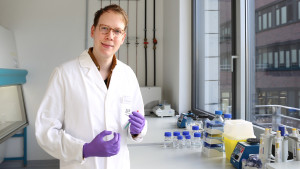
Das Bild zeigt Dr. Christopher Nelke im Labor. In den Händen hält er eine Probe. The picture shows Dr Christopher Nelke in the laboratory. He is holding a sample in his hands.

During his research stay at ISAS, Dr Christopher Nelke, assistant physician at Düsseldorf University Hospital, spent several days in the laboratory solely preparing samples.

© ISAS

1. During your stay at ISAS, you had thymus samples with you. Why were you analysing them?

Nelke: At UKD, we are addressing myasthenia gravis. This is an autoimmune disease in which antibodies against the connection between nerves and muscles lead to muscle weakness. In all probability, these antibodies are in part formed due to a misdirected immune response against the thymus. The thymus, also known as the thymus gland, is a small lymphatic organ located behind the sternum.

Through my stay at ISAS, we wanted to learn how the protein composition of the thymus changes with this disease. The analysis is not particularly easy, as the material is rare and the thymus is different in every individual. The samples stem from patients with myasthenia gravis. Since the disease is rare, these specific samples are also very rare. For this reason, we had to limit ourselves to certain areas of the gland that were present in all samples. Together with colleagues at ISAS, I analysed them using mass spectrometric proteomics.

2. When you got an insight in Dortmund into the proteomics workflow for mass spectrometric examination, did this include all the steps needed to prepare samples? Of what use was the practical insight for your own research?

Nelke: The insight was very valuable, as up to then we had not seen enough really practical problems for a valid analysis. How big may one sample be? How big may the differences between individual samples be? How many samples can be processed and analysed at once? I believe these insights will help us to better plan upcoming research projects.

3. From your perspective, what is the greatest challenge or the greatest advantage of your work between the patient's bed and the research laboratory?

Nelke: Time is certainly the biggest challenge. It is always a balancing act to meet the demands of patients and simultaneously to find time for research. But I also think it is very helpful to be familiar with patients and their problems in order to follow up issues in research in a targeted manner and to then interpret the results.

(The interview was conducted by Sara Rebein.)
Share

Further articles

Four Perspectives on a Shared Discovery

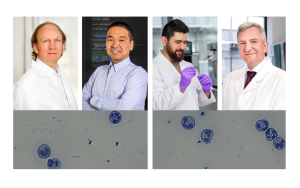
Although CD177⁺ and CD177⁻ neutrophils look identical under the microscope, they are in fact not the same. Four of the authors of “CD177 Deficiency Defines a Stable Subtype of Human Neutrophil Granulocytes with Tumour-Promoting Activity” (Advanced Science) explain how they identified the functional differences between these immune cells and which combined analytical methods made their discovery possible in the first place. This insight into their research demonstrates how interdisciplinary collaboration can reveal previously undiscovered information.

Das Foto zeigt im oberen Teil Porträts von vier Wissenschaftlern. Von links nach rechts: Prof. Dr. Matthias Gunzer, Prof. Dr. Jianxu Chen, Dr. Belal Alshaar, Prof. Dr. Albert Sickmann. Im Teil unter den Porträts sind Mikroskopaufnahmen von CD177-definierten Neutrophilen zu sehen.

3 Questions for Neele Rottmann

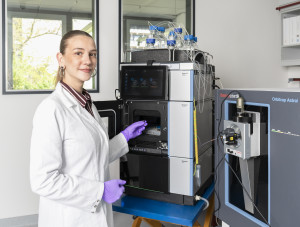
In the lab, Neele Rottmann prepares human and animal samples for mass spectrometry analysis. As part of the HI-FIVE project, she is helping to identify changes at the protein level in heart failure. Why does she spend so much time in the lab working on separations? The technical assistant shares the answer in this interview.

Neele Rottmann is wearing a white lab coat and purple gloves and is operating a mass spectrometry analyser in a laboratory. Next to her is a liquid chromatography system connected to a mass spectrometer via several tubes. There are numerous sample vials on the instrument. As she places a sample into the system, she looks into the camera.

High-tech against Cardiovascular Diseases: 3D Images of Blood Vessels

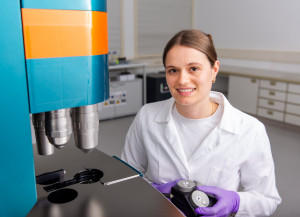
How do atherosclerotic plaques form in the coronary arteries? At ISAS, researchers are investigating cellular changes in human coronary arteries using techniques such as 3D imaging. During her internship, early-career researcher Leonie Menzel used a light sheet fluorescence microscope to analyse the spatial distribution of individual cells within the tissue. She thereby gained valuable methodological experience for her Master’s thesis.

3 Questions for Lukas Fu

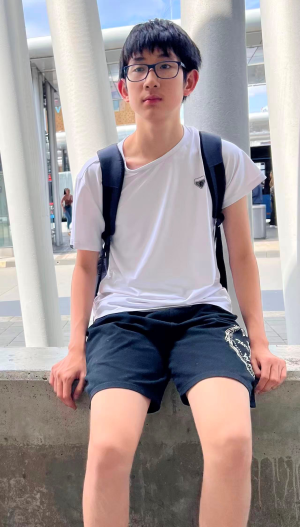
How can AI support the analysis of biomedical images? This was the question Lukas Fu explored during his school internship at ISAS. The 15-year-old also successfully completed his first programming project.

Lukas Fu, a 15-year-old with short black hair. He is wearing glasses and is sitting on a low wall.

Separating Fluorescence Signals Faster and More Precisely with AI

When different fluorescence signals overlap during microscopy, their clear assignment to specific biological structures becomes difficult. To address this common problem, Dr Davide Panzeri is developing AI-based signal separation methods. The biophysicist has been awarded a Marie Skłodowska-Curie Fellowship by the European Union for his promising research project.

Porträt Dr. Davide Panzeri.

Passionate Research, Shaping the Future

How do GRK5 inhibitors work at the cellular level and within the living organism? Biologist Dr Susanne Grund is working with her colleagues at HI-FIVE on a new therapeutic approach for heart failure. In this portrait, she describes what her day-to-day work looks like, balancing research on human stem cells with studies on mice.

ISAS BFF Uploader

What are you doing at ISAS, Theresa?

Why do mice undergo ultrasound examinations of their hearts? What does a typical working day in the lab involve for a technical assistant in the HI-FIVE research project ? And what challenges does the job present? Theresa Pietz provides fascinating insights into her duties, motivations and experiences working with animals.

Study with Heart: A Doctor Bridging Clinic & Laboratory

What is actually happening behind the scenes of a patient trial? Anna Ruzhyna is a clinical research associate who looks after participants with heart failure as part of the HI-FIVE project. She explains how her work helps to develop new therapeutic approaches for the treatment of heart failure.